The Ultimate Guide to Website Design and Web Development: 7 Steps to Online Success

Written by: Haidersafi

Facts checked by: Haidersafi

Founded in 2025, FusioPoint is a global web design and mobile app development agency, trusted for delivering innovative and secure digital solutions.
In the modern digital landscape, website design and web development have become indispensable for businesses looking to establish a robust online presence. From the moment English computer scientist Tim Berners-Lee published the first website in 1991, the industry has evolved from simple text pages to complex, interactive ecosystems.
Today, a successful digital strategy requires a harmonious blend of aesthetic creativity and technical engineering. Whether you are a small business or a large corporation, understanding the intricacies of custom-designed websites is the key to outspreading your reach and increasing visibility.
What is the Difference Between Design and Development?
To the untrained eye, website design and web development might seem like the same thing, but they play distinct, mutually beneficial roles.
Website Design: The Visual Experience
Website design revolves around the visual aesthetics and user experience (UX). Designers use tools like Adobe Creative Suite and Adobe XD to craft layouts, color schemes, and typography. Their goal is to create a natural user interface (UI) that guides visitors toward conversion.
Web Development: The Technical Engine
Web development is the process of turning those designs into reality through coding. This is generally split into three categories:
- Front-End Developers: They use HTML, CSS, and JavaScript (often leveraging frameworks like React or AngularJS) to translate mock-ups into interactive interfaces.
- Back-End Developers: They handle server-side logic and database management using languages like PHP, Python, or Java.
- Full-Stack Developers: These versatile experts understand both sides, ensuring secure communication between the interface and the database.
In some rare cases, you find a “Unicorn”—a professional who excels at both design and code. However, for larger projects, distinct roles usually lead to optimal solutions.
The Importance of Responsive Web Design (RWD)
With mobile usage dominating internet traffic, Responsive Web Design (RWD) is no longer optional; it is a necessity. RWD ensures that custom-designed websites adapt evenly across various devices, regardless of resolution.
Using viewport breakpoints and fluid grids, RWD allows content to scale to fit phones, tablets, and desktops. Implementing a mobile-first approach prioritizes essential content for smaller screens, which can then be expanded for desktop viewers. This not only improves usability but is a critical factor for Search Engine Optimization (SEO).
For specific needs, Adaptive Web Design (AWD) can also be utilized to serve different versions of content based on the user’s specific device capabilities or bandwidth.
7 Strategic Steps for Professional Website Builds
At agencies like POLA Marketing, the website design and web development process follows a rigorous structure to ensure excellence.
1. Discovery and Strategy
Success begins with research. This phase involves defining business goals, analyzing competitors, and understanding the target audience to create a strategic plan.
2. Architecture and UX
Good information architecture ensures users can find what they need. This involves planning navigation hierarchies and content categorization.
3. Prototyping and Art Direction
Before coding begins, designers create wireframes and interactive prototypes. This allows stakeholders to visualize the flow and aesthetic style, ensuring it aligns with the brand identity.
4. Custom Development and Programming
Developers build the infrastructure using clean, maintainable code. This ensures the site is scalable, secure, and high-performing.
5. Content Creation
Content is king. As Jeffrey Zeldman noted, poor content devalues the site. Teams must ensure text, images, and videos are engaging and optimized for search intent.
6. Social Media Integration
Modern websites must be connected. Integrating social feeds and sharing buttons enhances user engagement and extends brand visibility across platforms.
7. Testing and Launch
Rigorous testing checks for loading speeds, mobile responsiveness, and broken links before the site goes live.
SEO: How google find and rank your website
When a new site launches, it doesn’t appear in Google instantly. As noted by industry experts at BlinkJar Media, search engines do not work like a light switch. The process involves three stages:
- Crawl: Google’s bots scan and read the site content.
- Index: Valid pages are stored in the search engine’s database.
- Rank: Algorithms decide where your site belongs in the SERP compared to competitors.
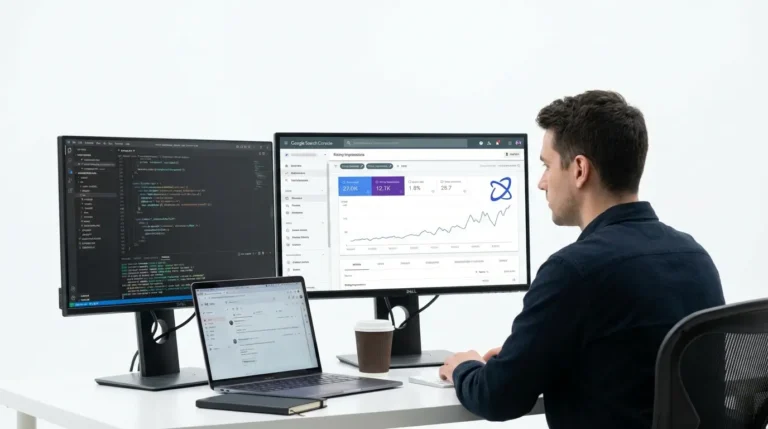
To assist this process, developers must submit a sitemap via Google Search Console and ensure the site structure is crawlable.
Conclusion: Investing in Your Digital Future
Website design and web development are investments in your corporate identity. A professional custom-designed website builds trust, improves dwell time, and lowers bounce rates.
As Christopher Dayagdag summarized: “Good Heart + Passion + Web Design + SEO + Digital Marketing + Dedication + Positiveness + Patience = Success.”
Prioritize Essential Content First
By prioritizing user experience, mobile responsiveness, and solid technical foundations, you can transform your website from a simple brochure into a powerful marketing tool.
In this article
- What is the Difference Between Design and Development?
- The Importance of Responsive Web Design (RWD)
- 7 Strategic Steps for Professional Website Builds
- SEO: How google find and rank your website
- Conclusion: Investing in Your Digital Future
Web Design, Development

Haidersafi
Haider Safi is a senior content writer who excels at making complex tech ideas simple and engaging. He's a strategic storyteller for the digital world, giving a clear voice to breakthrough concepts. Outside of writing, you'll find him diving into a great book or tracking the next big trend.